
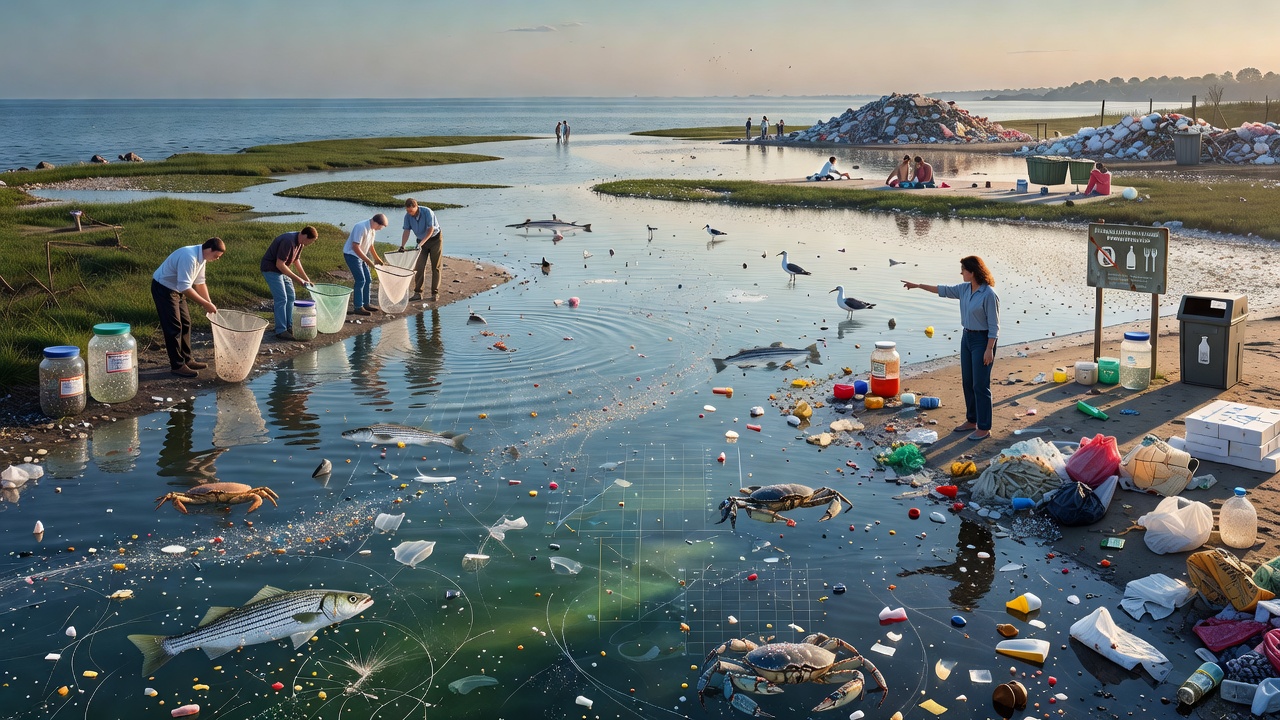
A study released Tuesday documents microplastic pollution across the Chesapeake Bay and its tributaries, a watershed that spans six states and the District of Columbia. The Pennsylvania-based PennEnvironment Research and Policy Center led the work with several other research groups, and the authors described their findings as "jarring."
What the sampling found
Researchers collected water samples from across the watershed and tested them for four kinds of microplastic: fibers, fragments, film and beads. Every sampled waterway contained microfibers. About 93 percent of sampled areas contained microfragments, roughly 47 percent contained microfilm, and about 27 percent contained microbeads.
Microplastics are defined in the study as plastic pieces smaller than 5 millimeters. They form as larger plastic items break down in the environment over time, which means the pollution is not limited to a single source but builds up gradually as plastic waste persists.
Why the researchers point to waste levels
The study identifies the volume of discarded plastic as the main driver. The authors estimate that Americans alone generate about 35 million tons of plastic waste each year, and that only about 6 percent of it is recycled.
Chesapeake Bay Foundation Maryland Science Manager Gussie Maguire said the results confirmed what many people already suspected. She noted that visible litter floats in tributaries and collects on beaches, while the smaller particles remain in the water and, as the study notes, have been found in air, food and human bodies.
Health and wildlife concerns, and what remains unknown
The authors say microplastics pose serious suffocation and starvation risks to wildlife. The effects on people are less settled. The study states that while levels in water samples are well documented, more research is needed "to fill in gaps around the full scope of health effects of microplastics in humans."
Policy steps the study recommends
The report calls on federal, state and local leaders to reduce plastic use, particularly single-use items and packaging. Its proposals include producer responsibility laws that would shift the cost of managing hard-to-recycle waste onto manufacturers, and deposit and incentive programs to encourage recycling.
- States in the watershed could phase out polystyrene food service products, single-use plastic bags and plastic utensils where such rules do not already exist.
- Congress could expand producer responsibility for packaging and bottle deposit programs.
- Maguire urged Maryland to limit single-use plastics and fund litter reduction, emphasizing that reducing and reusing should come before recycling.